What Do Termites Look Like
What do termites look like?
Melbourne residents turn to Melbourne Pest Exterminators for safe termite treatments that eradicate termites quickly.
Ants vs Termites
Termites have two pairs of equal length wings. While ants wings in the front are larger than wings in back.
Termites have straight antennae; ants’ are elbowed. Termites are like a sausage thick all the way along; an ant’s body has a pinched waist.
Termite Alates – Flying Termites
Termite Alates or flying termites are the most common form of termite we see and are seen from late spring into summer as part of the seasons termite swarming process.
Trillions of termites swarmers hit the skies and literally just land everywhere, hoping to find a place to build a new termite nest.
Most homes in Melbourne with spider webs will have these caught in them at this time of year. Termite swarming mostly occurs at the end of a humid day late spring or summer just before a storm and often at dusk.


Why choose us for your termite treatment system
If you believe you have termites, we will find them and eradicate them. We are known across Melbourne as the obvious choice for safe and effective termite treatments. Here’s why.
- Free on-site quotes from highly-trained experts before we start – so you needn’t worry about nasty surprises.
- A commitment to environmentally-friendly techniques and methods to protect you, your family, and your pets.
- Price-beat guarantee. We’ll beat any comparable quote by $100.
- No harmful chemicals.
- Professional, uniformed technicians…for the highest level of service plus no mess and no disturbance.
- Payment plans available – no interest ever!
What to do – if you are sure you have termites
Just get one of our termite experts to come and have a look, they will let you know on the spot what your options are and provide a no-obligation quote.
Here’s how to identify the 5 most destructive termites.
What to do – if you are not sure if you have termites
You really need to get a Termite Detection Report that will tell you what you have, where they are and what your options are. The report costs $280. It is recommended in the Australian Standards to get one of these reports every year for your property.
Subterranean Termites
Most of the species of termites that damage timber-in-service in Australia are subterranean termites. Mastotermes darwiniensis and Coptotermes spp. are the most destructive. Coptotermes acinaciformis is responsible for more economic loss than all the other Australian species combined.This is due to its extensive range, the severity of its attack, and its ability to survive in built-up areas such as cities and large towns.
Schedorhinotermes and Nasutitermes are also of economic importance. Nasutitermes exitiosus is particularly wide-spread in the cool temperate regions of the southern mainland states. The annual cost of termite damage to buildings is estimate at 7 billion dollars annually. Research shows that a house that have been attacked by termites can be devalued by more than 25%. 1 in 3 homes in its lifetime will be attacked by termites.

Heterotermes Termites 4.75mm±2mm
Heterotermes are pests of decking, fencing and weathered and decaying timber. They are rarely found in sound timber. In the tropics they do attack sound timber more often. Their long rectangular heads distinguish them. The mandibles are curved and have no obvious teeth.
Schedorhinotermes Termites
This genus has two casts of soldiers, the Major Soldier and the Minor Soldier. The head is bulbous. The mandibles have teeth on the inner surface. The Major Soldier has uneven serrations on the base of the mandibles. The Minor soldier is about two-thirds of the length of the major soldier. They have a narrower head and more slender mandibles. Schedorhinotermes, are becoming a major problem termite and are now very wide spread. They are not known to attack Oregon timber. They are often found in bark chips in garden beds. Schedorhinotermes moult infrequently during winter and are hard to control for this reason.


Mastotermes Termites 12.25mm
This very destructive termite is capable of causing extensive damage to timbers, Fortunately they are only found in the tropical north of Australia. They are easily recognizable by their size. Identification is confirmed by the number of segments in the lower portion of the leg. They have been known to totally destroy a home within 3 months.
Nasutitermes Termites 4.2mm
Nasutitermes termites are easily recognized their beak shaped head and lack of mandibles. They are often darker in color compared to others. They usually build distinctive termite nests in trees.

Coptotermes Termites 5.8mm ± O.8mm
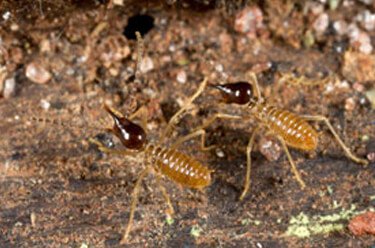
This species of termite is responsible for causing the most damage to properties across Australia. This is due to its widespread distribution, throughout Australia and its voracious appetite. They are easily recognised by the latex that is exuded from the fontanelle on the head of the soldiers when they are disturbed. The soldiers are aggressive and can bite when agitated. The mandibles are smooth with no serrations present, the head is pear shaped and rounded.
What Do Termites Look Like? A Comprehensive Guide for Homeowners
Termites are often called silent destroyers because they can cause extensive damage to wood structures before homeowners even notice their presence. If you’re wondering, what do termites look like, you’re not alone. Understanding their appearance and characteristics is the best way to identify termites and prevent a termite infestation before it gets out of hand.
Do Termites All Look the Same?
There are different types of termites, each with unique physical traits. In general, termites have soft bodies, range in color from creamy white to light brown or dark brown, and have straight antennae—a key difference from ants, which have bent antennae.
Different Castes and Their Characteristics
Each termite nest consists of different castes, including worker termites, soldier termites, reproductive termites, and the termite queen. Each termite type has a specific role in the colony:
- Worker Termites: Small, creamy white, and soft-bodied, worker termites are responsible for gathering food and maintaining the colony.
- Soldier Termites: These termites protect the colony with their large mandibles. Termite soldiers vary in color, often appearing light brown or dark brown.
- Reproductive Termites (Alates): Also known as winged termites or termite swarmers, they have pairs of wings of equal length and are responsible for starting new colonies.
- Termite Queen: The largest member of the colony, the termite queen lays thousands of eggs, ensuring the colony’s growth.
Identifying Different Types of Termites
There are several different species of termites, with the most common types including:
1. Subterranean Termites
- Found in crawl spaces, underground, or in mud tubes.
- Cause the most termite damage due to their aggressive feeding habits.
- Typically creamy white to dark brown.
2. Drywood Termites
- Infest drywood rather than requiring soil contact.
- Create small piles of termite droppings resembling sawdust.
- Often found in wood structures like furniture and walls.
3. Dampwood Termites
- Prefer soft wood with high moisture content.
- Typically larger than Drywood termites and Subterranean termites.
4. Formosan Termites
- A highly destructive termite species, capable of forming massive colonies.
- Known for their termite swarms and aggressive behavior.
Signs of a Termite Infestation
A termite problem can go unnoticed until serious damage is done. Here are the key signs to look for:
- Mud Tubes: Found along foundations or walls, these tunnels help worker termites travel safely.
- Hollow-Sounding Wood: Tap on wood; if it sounds hollow, termites look like they’ve been eating through it.
- Bubbling Paint: Often mistaken for water damage, this can be caused by termite activity.
- Sawdust-Like Droppings: Termite droppings from Drywood termites resemble sawdust.
- Termite Swarms: Seeing flying termites or discarded pairs of wings is a major warning sign.
Termite Treatment and Prevention
The best way to handle a termite infestation is through professional intervention. A reputable pest control company can offer Pest Inspections and a Free Quote for termite treatment. Here’s how you can protect your home:
- Schedule a Termite Inspection: Regular Pest Inspections can help detect termite activity early.
- Eliminate Food Sources: Reduce wood-to-soil contact and remove soft wood or damp areas.
- Seal Entry Points: Close gaps in foundations and around pipes.
- Use Baits or Barriers: Professional Pest Control Services offer chemical treatments to prevent infestations.
By knowing what do termites look like, recognizing the different types of termites, and understanding how to address a pest problem, homeowners can take proactive steps to protect their property from these silent destroyers.